
January is the month of self-improvement. We think about discipline, healthier routines, and especially mental health. We commit to habits that promise increased productivity and resilience. Yet one of the most consistently supported tools for improving mental wellbeing is often overlooked: exposure to green spaces.
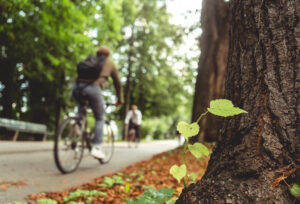
Mountains of evidence from psychology, neuroscience, epidemiology, and public health suggest nature isn’t just a backdrop for wellbeing – it supports it in measurable ways. So if you have committed to improving mental health this year, make sure to prioritise time in green spaces and nature!
Two well-established theories help explain why nature affects mental health.
Attention Restoration Theory suggests that natural environments help restore depleted cognitive resources by engaging attention in a gentle, effortless way (Kaplan & Kaplan, 1989).
Stress Reduction Theory proposes that natural settings trigger automatic physiological responses that reduce stress and negative affect (Ulrich et al., 1991).
Controlled studies and meta-analyses show that exposure to green environments, compared with built or traffic-heavy settings, is associated with:
Neuroimaging studies further suggest that natural environments reduce activity in brain regions associated with rumination and stress, while supporting areas involved in emotional regulation (Bratman et al., 2015).
From an evolutionary standpoint, humans evolved in environments where cues such as birdsong, flowing water, and vegetation signaled safety and resource availability. These cues are still interpreted by the brain as low-threat environments, even today. In contrast, urban noise, crowding, and visual clutter keep stress-response systems activated for longer periods (Ulrich et al., 1991).
In modern, fast-paced societies, green spaces may therefore function as a biological recovery mechanism, allowing stress systems to down-regulate more effectively.

Mental health benefits of green space are closely tied to physical environmental effects.
Urban vegetation helps:
These improvements in air quality, temperature regulation, and noise reduction have downstream effects on both physical and mental health. In addition, people living near green spaces tend to be more physically active, which independently improves mood, sleep, and cognitive function (Twohig-Bennett & Jones, 2018).
Importantly, studies show that even passive exposure, such as viewing greenery from a window, can produce measurable benefits, suggesting that effects are not driven solely by exercise or lifestyle differences (Markevych et al., 2017).
Green spaces do not only benefit individuals—they also shape social environments.
Research shows that access to green spaces is associated with stronger social cohesion, increased neighbourhood interactions, and reduced loneliness (de Vries et al., 2013; Maas et al., 2009).
Community gardens and shared green areas:
These effects are particularly important for older adults and socially isolated individuals. Longitudinal and intervention studies suggest that improvements in wellbeing often occur after green spaces are introduced, indicating that benefits are not solely due to self-selection (de Vries et al., 2013).
Taken together, the evidence suggests that green spaces function as preventive public health infrastructure.
Urban planning research shows that:
Designing cities that align with human biology is not idealistic: it is evidence-based. Policies that integrate green space into urban environments can reduce long-term healthcare burdens while improving quality of life.
Nature cannot replace therapy, medication, or structural social change. But the evidence consistently shows that exposure to green environments supports mental health, physical health, and social wellbeing.
So if you want to focus on discipline and self-improvement, remember that one of the most effective habits may also be one of the simplest: spending time in environments that allow your brain and body to recover. Just make sure to grab a warm beanie and some gloves in the cold winter months, or enjoy the birds in your garden from the comfort of your living room!
References
Bratman, G. N., Hamilton, J. P., Hahn, K. S., Daily, G. C., & Gross, J. J. (2015). Nature experience reduces rumination and subgenual prefrontal cortex activation. Proceedings of the National Academy of Sciences, 112(28), 8567–8572.
https://doi.org/10.1073/pnas.1510459112
de Vries, S., van Dillen, S. M. E., Groenewegen, P. P., & Spreeuwenberg, P. (2013). Streetscape greenery and health: Stress, social cohesion and physical activity as mediators. Social Science & Medicine, 94, 26–33.
https://doi.org/10.1016/j.socscimed.2013.06.030
Kaplan, R., & Kaplan, S. (1989). The experience of nature: A psychological perspective. Cambridge University Press.
Maas, J., van Dillen, S. M. E., Verheij, R. A., & Groenewegen, P. P. (2009). Social contacts as a possible mechanism behind the relation between green space and health. Health & Place, 15(2), 586–595.
https://doi.org/10.1016/j.healthplace.2008.09.006
Markevych, I., Schoierer, J., Hartig, T., Chudnovsky, A., Hystad, P., Dzhambov, A. M., … Fuertes, E. (2017). Exploring pathways linking greenspace to health: Theoretical and methodological guidance. Environmental Research, 158, 301–317.
https://doi.org/10.1016/j.envres.2017.06.028
Ohly, H., White, M. P., Wheeler, B. W., Bethel, A., Ukoumunne, O. C., Nikolaou, V., & Garside, R. (2016). Attention Restoration Theory: A systematic review of the attention restoration potential of exposure to natural environments. Journal of Toxicology and Environmental Health, Part B, 19(7), 305–343.
https://doi.org/10.1080/10937404.2016.1196155
Twohig-Bennett, C., & Jones, A. (2018). The health benefits of the great outdoors: A systematic review and meta-analysis of greenspace exposure and health outcomes. Environmental Research, 166, 628–637.
https://doi.org/10.1016/j.envres.2018.06.030
Ulrich, R. S., Simons, R. F., Losito, B. D., Fiorito, E., Miles, M. A., & Zelson, M. (1991). Stress recovery during exposure to natural and urban environments. Journal of Environmental Psychology, 11(3), 201–230.
https://doi.org/10.1016/S0272-4944(05)80184-7
World Health Organization. (2016). Urban green spaces and health: A review of evidence.
https://www.euro.who.int/en/publications/abstracts/urban-green-spaces-and-health-a-review-of-evidence-2016
Images used in this blog post are by Freepik (/freemufilms and /wirestock)